
Dr Patrik Schumacher
principal, Zaha Hadid Architects; author, The Autopoiesis of Architecture and Tectonism – Architecture for the 21st Century
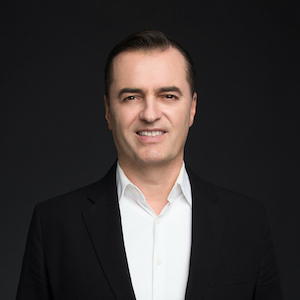
Patrik is principal of Zaha Hadid Architects. He joined Zaha Hadid in 1988 and was seminal in developing Zaha Hadid Architects to become a 500 strong global architecture and design brand.
He studied philosophy, mathematics and architecture in Bonn, Stuttgart and London. He received his diploma in architecture in 1990. He has been a partner since 2003 and a co-author on all projects. In 2010 Patrik won the Royal Institute of British Architects’ Stirling Prize for excellence in architecture together with Zaha Hadid, for MAXXI, the National Italian Museum for Art and Architecture of the 21st century in Rome. He is an academician of the Berlin Academy of Arts.
In 1996, he founded the Design Research Laboratory at the Architectural Association in London where he continues to teach. In 1999 he completed his phd at the Institute for Cultural Science, Klagenfurt University. He is lecturing worldwide, and held the John Portman Chair in architecture at Harvard’s GSD. He currently serves as International PhD Supervisor at Tongji University College of Architecture and Urban Planning. Over the last 20 years he has contributed over 100 articles to architectural journals and anthologies. In 2008 he coined the phrase Parametricism and has since published a series of manifestos promoting Parametricism as the new epochal style for the 21st century. In 2010/2012 he published his two-volume theoretical opus magnum The Autopoiesis of Architecture. His latest book, Tectonism – Architecture for the 21st Century, was released in 2023. His current research focuses on the metaverse as opportunity for architecture.He is widely recognised as one of the most prominent thought leaders within the fields of architecture, urbanism and design.
Follow Patrik on Twitter: @patrik_schu
RELATED SESSIONS
Sunday 20 October, 12:45 Harvey Goodwin Suite, Church House
From ‘powerhouse’ to populism: Germany today